Hi,
I am studying basic electronics in spare time.
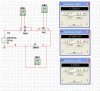
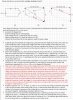
Enclosed is a simple RLC circuit I made by MultiSim (the capacitance and inductance values are chosen intentively small and big). It seems the amplitudes (regardless the phase shift here) of the voltage drops on C and L can be very large, as compared to that of the input voltage. That means, if this circuit is used as a filter network, then we can get magnified signal from C or L. That means we get both filtering and amplification functionality from the passive network. My question is, is this correct, or if this kind of configratuion often used in pracitical circuits? If not, why?
Btw, yes, I am aware of that, if only C or L is used with R, the amplitude of the voltage drop on either of them (R and C or L) can not be bigger than the amplitude of the input voltage (i.e., according to side length relationship of right-angled triangles).
Thanks,
/bruin
I am studying basic electronics in spare time.
Enclosed is a simple RLC circuit I made by MultiSim (the capacitance and inductance values are chosen intentively small and big). It seems the amplitudes (regardless the phase shift here) of the voltage drops on C and L can be very large, as compared to that of the input voltage. That means, if this circuit is used as a filter network, then we can get magnified signal from C or L. That means we get both filtering and amplification functionality from the passive network. My question is, is this correct, or if this kind of configratuion often used in pracitical circuits? If not, why?
Btw, yes, I am aware of that, if only C or L is used with R, the amplitude of the voltage drop on either of them (R and C or L) can not be bigger than the amplitude of the input voltage (i.e., according to side length relationship of right-angled triangles).
Thanks,
/bruin