Electronic Circuits and Projects Forum


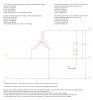
3 Phase Converter Schematic. (Miller system)

12 Last »
  1. #1
    tcmtech tcmtech is offline

    3 Phase Converter Schematic. (Miller system)

    I was going through my old Cad files and found this schematic I made a while back.
    I figured that with a good write up to explain how it works to back it up it could prove useful for anyone who wanted to run three phase motors or build a balanced phase rotary converter for running three phase powered equipment off of a single phase source. It’s also known around my parts as a Miller system.

    This is not the crappy low power, low efficiency, weak starting phase converters that you buy from the dealers. This is a well proven good high powered high efficiency design that can make most unmodified three phase motors run on single phase with both full starting torque and normal running power and efficiency.

    I have built dozens of them and many are in daily usage applications and have given years of uninterrupted service working as both motors, phase converter power sources, and a few are now in dual use applications where they do double duty as a motor driving a mechanical load and as a balanced phase source rotary converter that runs additional loads.
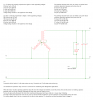
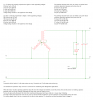
    3ph converter.png
    "Sometimes genius is simply having the ability to see and understand the obvious. " -- tcmtech

    "I didn't get to the point of knowing all that I do know by believing that I already know everything." -- tcmtech

  2. #2
    tcmtech tcmtech is offline
    The way I designed this type of system (Miller System) is rather strait forward and that allows for it to have some basic rule of thumb numbers that will get you close enough to be able get your setup working and will allow you to fine tune your system with very favorable results after that. For a basic reference point in the descriptions I will use what’s needed for converting a standard 1 HP 230 Volt 1750 RPM three phase motor.

    For a typical 1 horsepower 230 volt three phase motor to work well on single phase you will need two AC motor run capacitors (C1 and C2) of around 10 micro farads each and preferably with at least a 300 VAC rating however a higher voltage capacitor works the same. The motor start capacitor (C3) is a 100 uf 250 VAC type. These values are proportional to any size of motor within reason. For example a 25 HP motor would need two 250 uf motor run capacitors and 2500 uf of motor start capacitors. However the starting current would be around 500+ amps for a motor of that size though if its load was high! Being that AC capacitors for these types of applications don’t come in individual sizes that large it will be necessary to use several smaller ones set up in parallel banks in order to get close to the needed working values.

    Obviously if other voltages, frequencies, and power rating systems are used the numbers will change as well. The fact that they still follow proportionally is what’s important. 50Hz needs 6/5th’s the capacitance. 400 volts needs 230/400th's the capacitance and KW's needs 1000/746 the capacitance. The voltage reference values for tuning follow similarly as well.

    These recommended capacitor values are typical values and are by no means set in stone. Depending upon the characteristics of the motor and what type of loads it powers they can vary from as low as 50% to as high as 150% of the typical suggested values. So if an exact capacitor value is unavailable just pick its nearest value, its likely going to be close enough. The recommended 10 uf per hp at 230 VAC 60 Hz with a 100 uf per HP starting capacitance just works out as the common average. Also because every motor brand, model, and speed has a different inductance and average efficiency you may need to change the two capacitors values up or down for peak power and efficiency when matching the actual motor to its load. That is why the actual values you may end with could be rather far from the typical suggested values.
    This is done by reading the voltage across the L1 - L3 and the L2 - L3 lines while the motor is at its typical load range.
    0
    Last edited by tcmtech; 27th November 2009 at 10:18 PM.
    "Sometimes genius is simply having the ability to see and understand the obvious. " -- tcmtech

    "I didn't get to the point of knowing all that I do know by believing that I already know everything." -- tcmtech

  3. #3
    tcmtech tcmtech is offline
    The run circuit.

    The two motor run capacitors go from each supply line (L1 and L2) to the third phase line L3. That creates two basic LC tank circuits which use the rotors spinning motion to create a simple phase shifting autotransformer effect in the motor itself once it’s up to speed. This is what makes it possible for the motor to run up to its full working power rating. This is also how the three phase windings are able to work at the proper phase angle relationships to each other so as far as the physics are concerned the rotating magnetic field sees three sine wave power sources with a 120 degree phase angle separation between them.

    If the voltage is higher than around 115% of the incoming line voltage the capacitor values need to be bigger. If it’s lower than 90% of the incoming line voltage they need to be smaller. And always keep them equal. This is keeping the LC tank circuits tuned to near the line frequency and is what keeps the current loads between each phase balanced using that phase angle shifting autotransformer effect.

    3ph converter.png
    0
    Last edited by tcmtech; 27th November 2009 at 10:14 PM.
    "Sometimes genius is simply having the ability to see and understand the obvious. " -- tcmtech

    "I didn't get to the point of knowing all that I do know by believing that I already know everything." -- tcmtech

  4. #4
    tcmtech tcmtech is offline
    The start circuit.

    The start circuit is just a larger value of capacitance that is momentarily connected between L1 - L3 or L2 - L3. To set the direction of rotation connecting to one leg (L1) starts it rotation going one way and connecting to the other leg (L2) starts it rotation going the other way.

    Obviously disconnect it from the circuit once the motor is up to speed. This can easily be done with a common potential relay (S1) that is common to HVAC applications. However these relays release voltages will likely need to be adjusted in order to prevent it from either releasing too soon or not releasing at all.
    If it doesn't release when the motor is up to speed its voltage needs to be dropped. If it chatters or releases too soon it voltage needs to be raised. Most potential relays can be disassembled and adjusted internally.

    For setting the basic start circuit uses a potential relay that’s rated for a release voltage range near your motors third line running voltages. That is if both the L1 - L3 and the L2 - L3 voltages are around 230 - 250 volts when the motor is working normally the potential relay should have a release voltage of 240 volts or slightly less. However lowering or raising the starting capacitance value will change the starting current draw and torque and will also affect the potential relays release voltage set point as well.


    3ph converter.png
    0
    Last edited by tcmtech; 27th November 2009 at 10:10 PM.
    "Sometimes genius is simply having the ability to see and understand the obvious. " -- tcmtech

    "I didn't get to the point of knowing all that I do know by believing that I already know everything." -- tcmtech

  5. #5
    tcmtech tcmtech is offline
    Some additional set up notes.

    One often overlooked problem that does frequently arise is that as with a large single phase motor this system also has a high starting current draw until it gets up to speed. That can create a large enough voltage drop that the start cycle may not be able to function properly despite much efforts in tuning it.

    The only cure is to have large enough wire and a large enough power source to be able to feed it properly. On a 230 volt 60Hz system a typical load number is around 4 amps per HP at full running load. Starting load can easily be 5 times that though. A 40 amp circuit can easily start and run a 10 HP motor provided that the actual source can support the possible 200 amp start cycle load with out excessive voltage drop at the motor itself. Changing to a smaller start capacitor value will help limit the starting current but it also reduces the starting torque as well. This can cause slow starting which puts a heavy load on the windings and supply wire for a longer period of time.

    Depending upon where the unit is being used and the length of the supply lines from the source plus the actual capacity of that power source the maximum size motor you may be able to start will vary greatly. Someone on a farm or with a large house that has a 200 amp or larger service that’s supplied by a 25 KVA or larger transformer could conceivably power a 20 hp motor without problems. However a person living in an old residential neighbor hood in town that shares one common transformer with several houses may not be able to run over a few HP without the whole neighbor hood knowing about it every time it starts!

    For reference I run a 15 Hp industrial air compressor off of a 60 amp circuit and it has no problems starting all the way down to around - 20 F. But the motor is ten feet away from a 200 amp service that’s supplied by 4/0 gauge wire connected to a 15 KVA transformer 50 feet away.
    So before you run out and buy that industrial monster machine you found for scrap price be aware that you may have problems getting it to go if you don’t have the actual power system capacity to start it.

    Assembling one is reasonably easy and that’s why I give the information out for free! However tuning it to work efficiently and reliably is the hard part!
    0
    Last edited by tcmtech; 27th November 2009 at 10:11 PM.
    "Sometimes genius is simply having the ability to see and understand the obvious. " -- tcmtech

    "I didn't get to the point of knowing all that I do know by believing that I already know everything." -- tcmtech

  6. #6
    phaser phaser is offline
    Hi i had a question on your schematic in the description to use power correction caps between each phase line 7.5 mfd for 220volts where would these be installed? If my converter is up and running are they something i would put across the three output phases? I am building this to run a welder . It is based off 15hp detla-wye 1725rpm westinghouse 256 frame 220volt motor. I plan to utilize apporox 15 amp draw of of the 40 amp potential current capacity i will have available.
    Iwould appreciate any help you can give. Thanks
    0

  7. #7
    tcmtech tcmtech is offline
    The schematic in the first post pretty much explains the connections and the relative capacitor values as well.

    I am not sure how to make the circuit connections any clearer than that.

    For a 15 Hp wye connected motor the C1 and C2 values for a 220 - 240 volt motor would be roughly around 150 uf each. The welder itself may affect that number though and require a bit more depending on its design. No idea how much though.
    0
    Last edited by tcmtech; 5th February 2012 at 09:16 PM.
    "Sometimes genius is simply having the ability to see and understand the obvious. " -- tcmtech

    "I didn't get to the point of knowing all that I do know by believing that I already know everything." -- tcmtech

  8. #8
    raviteja10g61a0224 raviteja10g61a0224 is offline
    sir iwant single phase to three phase converter circuit for small model designing (eg:12v single phase to three phase convertor) thankyou am waiting for ur replay
    my email id:ravirocks.teja42@gmail.com
    0

  9. #9
    tcmtech tcmtech is offline
    All the numbers you need are in the schematics and relating write up.

    Understanding and implementing them properly is up to you.
    0
    "Sometimes genius is simply having the ability to see and understand the obvious. " -- tcmtech

    "I didn't get to the point of knowing all that I do know by believing that I already know everything." -- tcmtech

  10. #10
    BOB NAGER BOB NAGER is offline

    Phase converter

    Thanks for the help. The reason for the 480 single phase is the line loss on a long run and the wire cost when higher currents are required. The 480 reduces both. If the utility can supply 240 single phase they can supply 480 single phase. The application is an one hundred hp center pivot.
    Thanks again,
    Bob
    Additionally if you have the formula that shows the voltage relationship to capacitance, I would appreciate a copy. I know the increased voltage lowers the motor current, ie the capacitor current requirement, but do not have documentation.
    0

12 Last »
Tags
Similar Threads
Thread Starter Forum Replies Last Post
How does a 3 phase converter work? Andy1845c General Electronics Chat 3 23rd December 2007, 01:01 PM
3-phase system shermaine General Electronics Chat 3 8th March 2004, 04:20 PM
1 phase system and 3 phase system shermaine General Electronics Chat 9 16th February 2004, 12:41 AM
3-Phase Converter Justin171985 Electronic Projects Design/Ideas/Reviews 11 9th February 2004, 12:08 AM
three phase transformerless AC to DC power converter Mojalco Electronic Projects Design/Ideas/Reviews 0 28th October 2003, 02:03 AM
Electronic Circuits  |  Learning Electronics

Join our community with over 100,000 Members! It's free, easy and when you're logged in you have many more features! Click to register.
Page Time: 0.06013 seconds      Memory: 7,390 KB      Queries: 18      Templates: 0